Providing your visitors with the best possible information
A successful event begins even before the first visitor sets off. You draw up a transport plan, set up temporary car parks, organise walking routes and put up signage to manage traffic flows effectively. But how do you ensure that visitors have the right information even before they set off?
With Event Support, TripService helps you to inform, guide and monitor visitors throughout their entire journey. From the moment they purchase a ticket right through to their arrival at the venue, we ensure that visitors have access to up-to-date travel information and the best travel advice.
Our service combines targeted communication with digital traffic management and real-time monitoring. This enables us to inform visitors about their journey in advance, guide them en route via navigation systems such as Waze, Google Maps, TomTom and Apple Maps, and maintain a continuous overview of the traffic situation throughout the event. Afterwards, we provide comprehensive analyses and reports, clearly showing how visitors travelled, which measures were effective and where future events can be further optimised.
With Event Support, we create a better visitor experience, minimise traffic disruption for the local area and, together, ensure a safe and easily accessible event venue.
What are the benefits of Event Support?
- Reaching different target groups – such as visitors, local residents and commuters – in a targeted and demonstrable manner.
- Influencing travel behaviour by providing visitors with timely, appropriate travel advice or an alternative route.
- Providing road users with real-time information on the current traffic situation, expected disruption and available alternatives.
- Gathering valuable insights into traffic flows, the use of diversion routes, compliance with travel advice and the experiences of different target groups.
- Maintaining direct contact with visitors and other target groups, so that feedback can be gathered and communication can be continuously improved both during and after the event.
1. Communication
A good visitor experience begins well before the first visitor sets off. By providing visitors with timely and targeted information, you can prevent unnecessary congestion and ensure a more even distribution of visitor flows. This is not just about providing information, but rather about offering personalised and interactive travel advice tailored to the visitor’s circumstances.
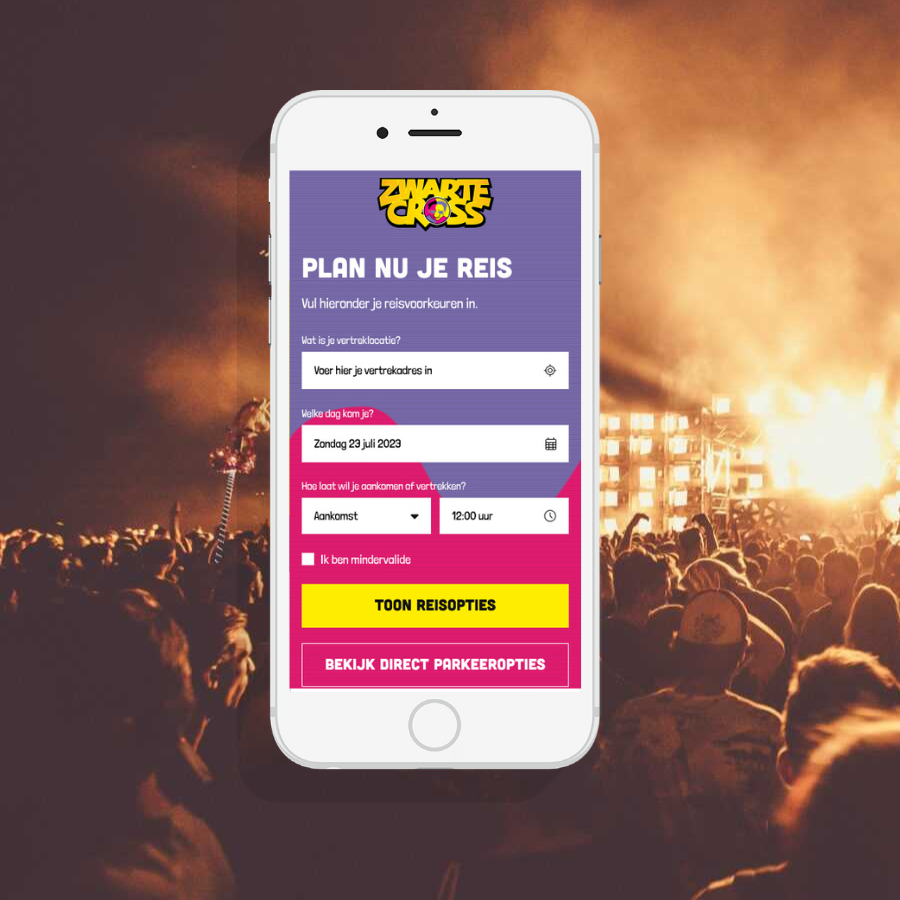
Mobility portal
The Mobility Portal supports visitors throughout their entire journey. Based on their departure address, they receive personalised travel advice, including the most suitable route, parking location and available transport options. This encourages visitors to choose the most efficient journey, whilst giving organisers greater control over traffic flows around the event.
In addition, the Mobility Portal provides valuable insights into visitors’ expected travel behaviour, such as the modal split, arrival times and chosen modes of transport. This information helps to optimise the mobility strategy before and during the event.
Online Traffic Management
Through targeted campaigns on platforms such as Waze, Google, Facebook, Instagram and LinkedIn, we reach the right target audiences even before they set off. In this way, we keep visitors, local residents and commuters informed about accessibility, expected traffic disruption and available alternative routes. This ensures that visitors are better prepared for their journey and allows us to actively manage traffic around the event.
2. Directing
Once visitors have received their travel advice and opted to travel by car, it is important that they reach their destination safely, efficiently and via the correct routes. With TripService’s solutions, we direct visitors to the appropriate car parks, park-and-ride facilities or event entrances, whilst diverting other traffic where necessary. This ensures that traffic flows remain separate and that access to the surrounding area is maintained.
Digital traffic management
Using the Traffic Reportal, we manage road closures, diversions and recommended routes in real time. This information is shared directly with the major navigation platforms, including Waze, Google Maps, TomTom and Apple Maps. As a result, road users automatically receive the most up-to-date route and are guided safely through or around the area.
Combining digital traffic control with existing signage creates an integrated traffic management system. Visitors automatically follow the correct route, whilst through traffic is directed via alternative routes. This contributes to a safe, easily accessible and manageable event environment.
Benefits:
- Real-time updating of routes, diversions and road closures in sat-nav systems.
- Safe and staggered flow of visitors to car parks and event venues.
- Reduced traffic pressure on the surrounding area through the smart separation of visitor traffic and through traffic.
- An effective digital complement to existing signage and traffic management measures.


3. Analysing
To manage traffic flows effectively during an event, up-to-date insights are essential. The Event Traffic Dashboard provides you with a single, centralised overview of the traffic situation, enabling you to quickly identify bottlenecks and take immediate action where necessary.
The dashboard combines data from navigation systems, cameras and incident reports to provide an overview of, amongst other things, traffic density, flow and journey times. This creates a comprehensive picture of accessibility around the event.
In addition to real-time monitoring, traffic data and Waze reports are stored historically. This data provides valuable insights for evaluating the event and forms a solid basis for optimising future mobility plans and traffic management measures.